16/11/2026
Employer Spotlight: Barford Owen Davies
What does modern accountancy really involve?
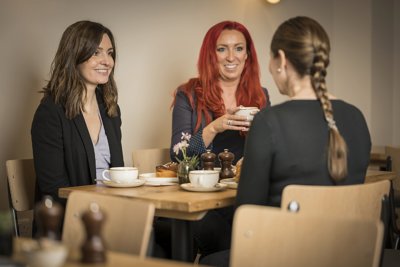
For Barford Owen Davies, it is not simply about completing year-end accounts or tax returns. The firm works alongside internal finance teams, helping ambitious Welsh businesses understand their performance, plan ahead and make confident decisions.
Its work includes:
-
Producing monthly management accounts
-
Supporting budgeting and forecasting
-
Analysing financial performance
-
Identifying what is driving the numbers
-
Explaining what the results mean
-
Helping businesses decide what to do next
Acting as an outsourced finance function, Barford Owen Davies works with owner-managed businesses across Wales in sectors including retail, hospitality, manufacturing and professional services.
The company is also a supporter of the Mullany Fund.
Emma Owen Davies first learned more about our work through Mullany Fund Ambassador Kathy James. Our mission to help young people explore STEM careers, connect with role models and reach their potential strongly resonated with her.
Although Barford Owen Davies is not structured to offer traditional work experience, the team worked with us to develop a different form of support: visiting schools to introduce young people to careers involving numbers, finance and the mathematical side of STEM.
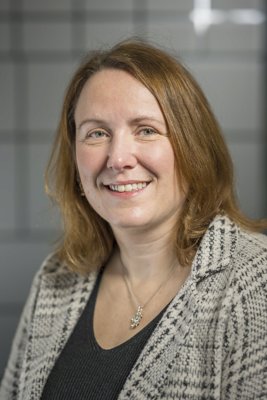
Emma also shared the values behind the business. Barford Owen Davies puts its people first, offering flexibility and trusting team members to organise their work around commitments such as childcare or health needs. Its client relationships are similarly built on mutual trust and respect.
The firm primarily recruits experienced finance professionals, but its work with clients gives the team opportunities to support people earlier in their careers. Emma has seen employees progress from accounts assistant roles to leading a company’s finance function.
What skills matter in finance?
-
Confidence with maths and numbers
-
Analytical thinking and pattern recognition
-
An understanding of business and the wider economy
-
Clear communication
-
Relationship-building and empathy
-
The ability to turn information into practical advice
Emma believes the skills once described as “soft” are among the most important. Finance professionals must be able to explain what the numbers mean, what might change them and how the information can support real-world decisions.
Technology and AI will make some manual processes faster, but human judgement will remain essential. Businesses will still need trusted advisers who can question unexpected results, understand the wider context and help people decide “what next?” and “what if?”
Emma’s advice to young people considering finance is not to specialise too early. Accountants come from many academic backgrounds, and interests beyond maths can help develop the broader understanding and people skills the profession needs.
“A lot of the conversations I have, probably 10% of what we actually talk about is numbers. The rest is about the impact on people.”
Thank you to Barford Owen Davies for supporting our work and helping young people discover where an interest in numbers could lead.
Find out more at www.bod.wales and watch the full interview below.
Career Spotlight: Conservation Scientist
How can maps, satellite images and community knowledge help us protect rivers? In our latest Career Spotlight, Dr Stephanie Januchowski-Hartley shares her journey into conservation science and explains how her research brings together freshwater ecology, spatial science and people’s relationships with nature.
Steph’s work has examined how dams affect rivers in the UK and across Europe. She uses mapping, satellite imagery, geographic information systems and modelling to explore where dams and fish populations occur—and how these structures may affect freshwater ecosystems.
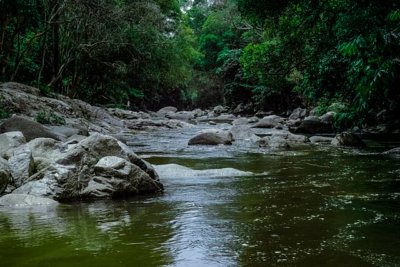
However, conservation science is not only about data.
Steph also works with communities to understand how people value rivers, what they appreciate about them and the knowledge they hold about local environments.
Her varied working days might involve:
-
Analysing satellite imagery
-
Creating maps
-
Modelling environmental data
-
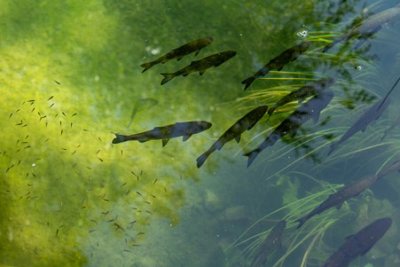
Investigating fish populations
-
Conducting research beside rivers
-
Speaking with local communities
Originally from the United States, Steph completed degrees in Natural Resources Management before travelling to Australia during her master’s studies.
A childhood toy koala had sparked a lasting fascination with Australia, and Steph initially became interested in working with koalas. While doing so, she developed skills in spatial science—but eventually realised that she did not want to study koalas for the rest of her career.
She had always been passionate about water, so she broadened her research to focus on freshwater ecosystems and completed a PhD in Conservation Science at James Cook University in Australia.
Since then, her research career has taken her around the world. She worked as a research fellow in Swansea and is now a Visiting Teaching Professor at Florida International University.
Steph did not grow up knowing that studying wildlife or working in nature could become a career. A brilliant biology teacher encouraged her interest in science, but it was only at university—when she discovered that classes could take place outdoors—that she began to see the possibilities.
Her advice to young people is to explore:
“Don’t be afraid to try different things. Sometimes we have to take little steps forward—or maybe a step back—and reflect on the steps we’re taking in our career.”
A career in science does not have to follow a perfectly straight path. New experiences can reveal interests, skills and opportunities you did not know existed.
Watch Steph’s full Career Spotlight interview here:
The Mullany Fund helps young people discover the breadth of STEM careers and connect with professionals who can offer honest insight, encouragement and practical guidance.
02/10/26
As part of our focus on the environment for Green Careers week, we bring you a post on marine careers! Meet Dylan, a Living Seas Project Officer working on the North Wales Saltmarsh Project, and Reece, Ocean Literacy Co-Ordinator for Wales.
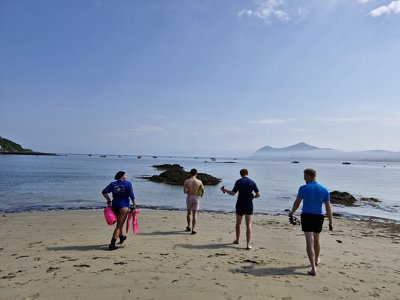
When you imagine a marine career, you might picture someone studying animals beneath the waves. But these careers can also involve coastal habitats, renewable energy, environmental research, education, policy and working with communities.
In the second part of our ‘Green and Blue’ Careers webinar, Dylan and Reece shared their journeys into Wales’ marine environmental sector.
Dylan is a Living Seas Project Officer working on the North Wales Saltmarsh Project.
Dylan studied Ocean Science, combining oceanography—the study of waves, tides, sediments and how the sea works—with marine biology. Salt marshes form where land and sea meet. They store carbon, provide nursery grounds for young fish and invertebrates, and support coastal birds—making their protection important for both biodiversity and the climate.
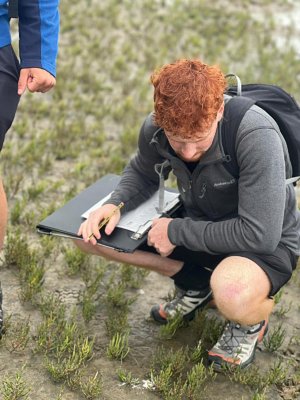
Dylan’s varied role includes:
- Vegetation surveys
- Fish surveys
- Drone work
- Scientific and historical research
- Report writing
- School visits and community engagement
Dylan studied Ocean Science, combining oceanography—the study of waves, tides, sediments and how the sea works—with marine biology.
After university, he worked in horticulture before returning to the marine sector through a paid internship. That experience introduced him to conservation, policy, renewable energy and other parts of the sector, eventually leading to his current role.
Reece is the Ocean Literacy Coordinator for Wales.
His work brings together organisations from across the country to help people understand our relationship with the ocean and the ways our actions affect it.
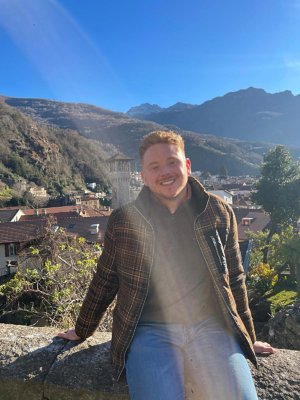
His role connects the marine environment with:
- Conservation
- Education
- Government
- Fishing and maritime industries
- Renewable energy
- Arts, music and community projects
Reece did not originally see his love of nature as a possible career. After studying zoology, he began volunteering with North Wales Wildlife Trust—an experience he describes as “the best decision” he ever made.
Volunteering helped him develop marine knowledge, confidence, contacts and public-speaking skills. It led to a community engagement role and then to his current position coordinating a national network.
Dylan and Reece’s stories show that careers rarely develop in a perfectly straight line. Experience gained through other jobs, volunteering, placements and internships can all help you reach your destination.
Their advice is to gain experience, build your network, recognise your transferable skills and keep an open mind about the opportunities available.
Watch the full Careers webinar here:
Learn More:
Instagram: @ymoranicymru
Facebook and LinkedIn: @Y Môr a Ni: Welsh Ocean Literacy Coalition
Saltmarsh in North Wales | North Wales Wildlife Trust
26/11/26
Monthly Roundup
From science and technology to exciting developments and opportunities across Wales, our monthly roundup brings together STEM news worth knowing about.
Download it here